This Video Is Trending Right Now →
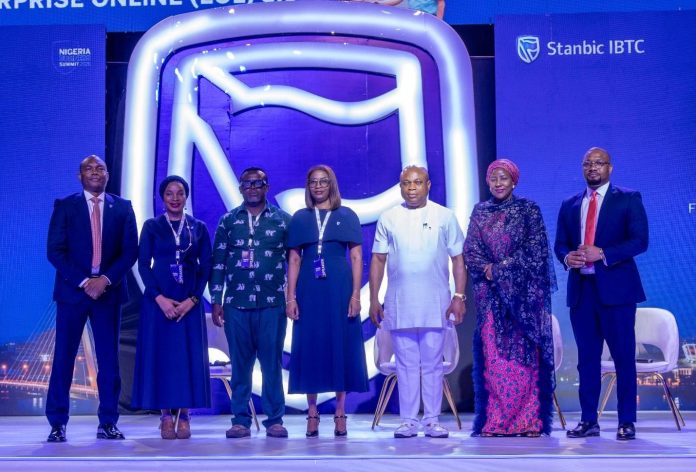
Small and medium‑sized enterprises (SMEs) will only scale sustainably if Nigeria confronts structural constraints around power, skills, and access to finance according to panelists at the Nigeria Business Summit 2026, during a session titled ‘The SME Economy: Advancing Trends and Opportunities’.
The session brought together perspectives from business operators, policymakers, and SME development institutions to examine why many enterprises remain trapped in survival mode and what must change to unlock growth at scale.
Speaking from the front line, Mr. Innocent Orji Egwuonwu, Managing Director of Ojay’s International, said operating conditions remain deeply challenging for Nigerian SMEs, particularly those in manufacturing.
“Access to finance and power are the two biggest constraints,” he said. “Interest rates of over 30 per cent make it very difficult for SMEs to survive, and collateral requirements are often unrealistic for young businesses.”
Egwuonwu noted that power costs alone can wipe out margins. “Diesel is now about ₦1,820 per litre. In my business, we spend over ₦1 million every week just generating power,” he said, adding that such costs directly limit expansion and job creation.
Beyond energy, Egwuonwu highlighted the burden of multiple taxation, calling for clearer and harmonised tax assessments to help SMEs plan and operate with certainty.
From a policy and institutional perspective, Mr. Charles Odii, Director General of the Small and Medium Enterprises Development Agency of Nigeria (SMEDAN), identified formalisation as the single biggest structural gap holding SMEs back.
“There are about 40 million MSMEs in Nigeria, but many are not captured in any system,” Odii said. “If a business is not registered, it is invisible, and when you are invisible, you cannot access finance, incentives or structured support.”
Odii explained that many SMEs cite access to finance as their main challenge, but that formalisation often determines whether financing becomes possible in the first place. SMEDAN, he said, is addressing this through cluster‑based models that reduce individual collateral requirements and provide zero‑interest or blended financing at scale.
Providing a state‑level policy lens, Mr. Christian Udechukwu, Commissioner for Trade and Industry, Anambra State, argued that SME growth accelerates when governments actively remove cost pressures.
“In Anambra, we focus on putting money back in the pockets of SMEs,” he said; pointing to free education, targeted tax relief, improved road infrastructure, and procurement policies that prioritise locally produced goods.
This Video Is Trending Right Now 👇
Udechukwu added that partnerships with financial institutions, development finance institutions, and agencies like SMEDAN allow SMEs to access funding of up to ₦10 million without traditional collateral; using cooperative and guarantee‑based structures.
“These interventions are not just about finance,” he said. “They are about creating an environment where SMEs can think beyond survival and begin to scale.”
When asked which single intervention would unlock growth fastest, perspectives converged around three interconnected levers: power, people, and finance.
Egwuonwu was unequivocal, he said “If one thing must be fixed, it is power. “Once power is stable and affordable, everything else becomes easier.
Odii pointed to the interdependence of constraints. “SMEs told us their three biggest problems are power, people, and finance,” he said; noting that interim solutions such as shared infrastructure, solar‑powered clusters, and logistics partnerships help reduce immediate pressures, even as long‑term reforms take shape.
Udechukwu emphasised skills as the fastest accelerator. “Finance without skills fails,” he said. “Skills drive productivity, improve bankability, and make enterprises resilient.”
The discussion underscored that SMEs seeking to scale must begin by formalising their operations, as registration remains the gateway to finance, partnerships, and structured support. Managing exposure to operating costs, particularly energy, through shared infrastructure, clusters, and alternative power solutions was also identified as critical. Panelists stressed that sustained investment in skills and capability improves both resilience and bankability, while cooperative models, blended finance, and advisory support can unlock growth where traditional lending constraints persist.
As highlighted during the session, SMEs looking to move from survival to scale can engage Stanbic IBTC Bank to explore financing options, advisory support, and partnership‑driven solutions aligned with their growth stage. Through collaboration with regulators, development agencies, and state governments, the bank continues to help Nigerian businesses translate insight into execution and growth into sustainability.
For more Naija celebrity news and updates, keep following Gist News for the latest Naija celebrity news and trends in Newspaper Nigeria Headlines.
Naija gist news
latest Naija gist
Naija news live