This Video Is Trending Right Now →
Key points
- Nigerian manufacturing firms are increasingly adopting natural gas to combat soaring diesel prices and high production costs.
- Regional trade chambers revealed that over 500 companies in the Niger Delta have shut down in recent years due to harsh economic conditions.
- Industrial energy data indicates that diesel generator power remains expensive globally, averaging about $0.30 per kilowatt-hour.
- Corporate expansions show Shell Nigeria Gas has added two major industrial customers to its distribution network in Agbara, Ogun State.
- Utility supply logistics confirmed that the new gas connections are equivalent to providing about four megawatts of electricity.
Main Story
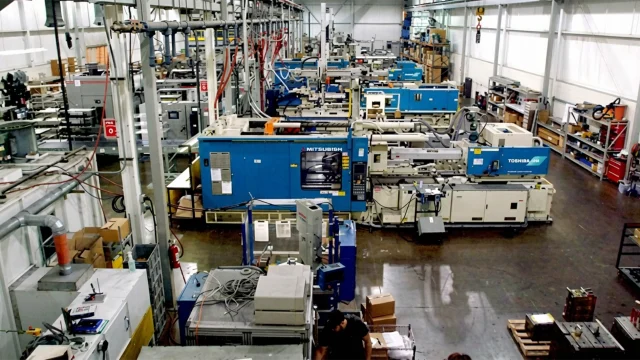
Manufacturing firms across Nigeria are increasingly turning to natural gas as rising diesel prices continue to push up production costs and threaten profitability in the industrial sec tor.
Industry stakeholders said the shift has become necessary as manufacturers grapple with high energy costs, unstable power supply and foreign exchange pressures that have worsened the operating environment for businesses.
The growing shift toward gas-powered operations comes amid sustained increases in diesel prices, driven partly by tensions in the Middle East and volatility in global energy markets.
To evaluate intermediate regional closures, severe electricity deficiencies and overhead surges have crippled local supply chains, leading to a massive contraction of the industrial footprint.
Chairman of the Board of the Niger Delta Chambers of Commerce, Industry, Trade, Mines and Agriculture, Idaere Gogo Ogan, speaking through the Board Secretary, Chief Solomon Edebiri, at a business and investment forum organised by Shell Nigeria Gas in Port Harcourt, Rivers State, lamented that more than 500 companies in the Niger Delta had shut down operations in recent years due to harsh economic and operational conditions.
Furthermore, downstream energy suppliers are aggressively capturing industrial market share by hooking large-scale factories directly onto sub-national pipelines.
At the forum, Shell Nigeria Gas disclosed that two new industrial customers – Intercontinental Distillers Limited II and Rumbu Industries Limited – had been added to its gas distribution network in Agbara, Ogun State.
The company said the development increased the number of firms using its gas solutions to more than 150 across Abia, Bayelsa, Ogun and Rivers states, offering both economic and environmental advantages over diesel.
The Issues
- Restructuring industrial infrastructure to transition away from expensive, carbon-heavy diesel generators.
- Reviving over 500 factories that shut down operations across the Niger Delta due to hostile macro-economic pressures.
- Mitigating foreign exchange pressures and global energy market volatility driven by ongoing tensions in the Middle East.
This Video Is Trending Right Now 👇
What’s Being Said
- Highlighting the transformative potential of alternative energy within stagnant industrial hubs, Niger Delta Chambers of Commerce Board Chairman Idaere Gogo Ogan stated: “Effective utilisation of gas can significantly reshape industrial practices and revive business activity in the region,”
- Assessing the sheer scale of standalone combustion grids globally, environmental certification group Gold Standard noted that “developing countries account for between 350 gigawatts and 500 gigawatts of diesel generator capacity spread across an estimated 20 million to 30 million sites, with generator output in many cases exceeding the capacity of national grids.”
- Detailing the heavy financial burden of fossil fuel generation, the organisation added “that diesel-generated power remains expensive, averaging about $0.30 per kilowatt-hour and significantly higher in remote areas with poor electricity access.”
- Tracking the total financial resources drained by standalone generators annually, the text noted that “annual global spending on generator fuel ranges between $30 billion and $50 billion.”
- Outlining the specific operational advantages reported by manufacturing clients following conversion, Shell Nigeria Gas Head of Gas Distribution Chukwuka Amos-Ejesi declared: “Companies that transition to natural gas consistently benefit from lower and more predictable energy costs, reduced exposure to liquid fuel price volatility, enhanced operational uptime, improved planning certainty and a stronger competitive offering for their customers,”
What’s Next
- Shell Nigeria Gas engineers will complete the final calibration of the gas supply pipelines feeding the facilities of Intercontinental Distillers Limited II and Rumbu Industries Limited.
- The Manufacturers Association of Nigeria will gather cost data from the 150 firms utilizing natural gas to draft an industry-wide efficiency report.
- Regional trade chambers will design investment programs to attract local and international capital into natural gas conversions for struggling enterprises.
Bottom Line
To escape volatile diesel costs averaging $0.30 per kilowatt-hour, Nigerian manufacturers are abandoning liquid fuel generators in favor of piped natural gas, with Shell Nigeria Gas scaling its network to over 150 industrial clients by adding a 4-megawatt equivalent supply to factories in Agbara, Ogun State.
For more Naija celebrity news and updates, keep following Gist News for the latest Naija celebrity news and trends in Newspaper Nigeria Headlines.
Naija gist news
latest Naija gist
Naija news live