This Video Is Trending Right Now →
Keypoints
- The Lagos State Government has introduced a directive requiring residents of state-owned housing estates to obtain official approval before making external alterations or installing solar panels.
- The policy aims to maintain structural integrity, ensure fire safety, and preserve the uniform aesthetic of government-managed housing schemes.
- Construction experts warn that while the safety concerns are valid, the policy may discourage the adoption of renewable energy and create “bureaucratic delays.”
- Some residents support the move to prevent “poorly-executed modifications,” while others fear it will add unnecessary costs to solving their own electricity problems.
- Stakeholders are calling for a “balanced approach,” suggesting the government should remove fees for solar installations to encourage green energy.
Main Story
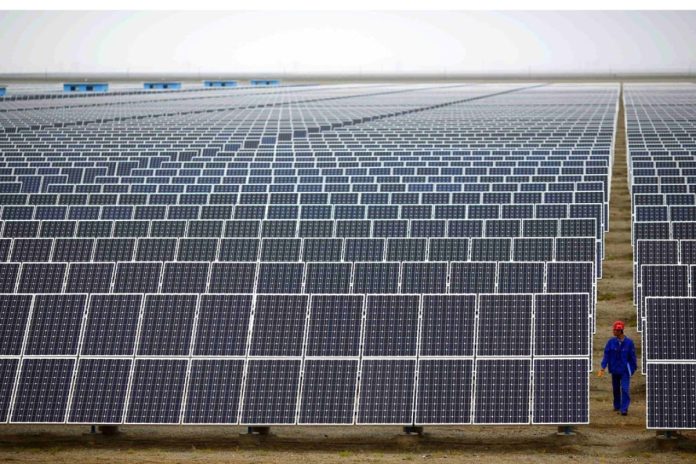
Lagosians are debating a new regulatory hurdle in their quest for stable power. On Tuesday, April 28, 2026, residents expressed mixed reactions to a state government policy that places solar panel installations on government estates under strict oversight.
In a city where the national grid is often unreliable, solar power has become a lifeline for many, but the state now insists that “safety and standards” must come first.
Construction expert Ayotunde Bally noted that the move is likely an attempt by the state to regain control over structural standards and revenue.
While he admitted that fire risks from poor wiring and the weight of panels on older roofs are legitimate concerns, he warned that the extra paperwork could “slow down property usability.”
For many residents, the primary worry is that a simple attempt to escape blackouts will now be buried under government red tape and unofficial costs.
The Issues
The primary challenge is the green-energy-bottleneck; by adding an approval layer to solar installations, the state risks slowing down the transition to renewable energy at a time when energy poverty is high. Authorities must solve the problem of bureaucratic-friction, as long approval timelines could leave residents in the dark for months.
This Video Is Trending Right Now 👇
Furthermore, there is a structural-safety risk; many government estates are decades old, and unregulated additions to roofs or walls could lead to collapses or electrical fires if not professionally vetted. To succeed, the Lagos State Government should consider digitizing the approval process and, as suggested by experts, removing fees to ensure the policy focuses on safety rather than revenue.
What’s Being Said
- “This new policy is less about restrictions and more about the government trying to regain control over standards, safety and revenue,” stated expert Ayotunde Bally.
- Bally added that the policy could “discourage renewable energy adoption,” which is needed to address energy poverty.
What’s Next
- The Lagos State Ministry of Housing is expected to release detailed guidelines on the specific technical requirements for solar installations on state estates.
- Residents are anticipated to begin applying for structural integrity tests as a prerequisite for solar mounting, especially on multi-story estate buildings.
- There is likely to be an advocacy push from Renewable Energy Associations to lobby the state for a “fast-track” approval lane for certified solar installers.
- The government may introduce periodic inspections of already-installed panels to ensure they meet the new safety codes mentioned in the directive.
Bottom Line
Lagos is walking a fine line between keeping its buildings standing and letting its citizens keep the lights on. While the “Blue Book” of estate management demands order and safety, the urgent need for solar power suggests that unless the approval process is fast and free, it may be viewed more as a “solar tax” than a safety measure.
For more Naija celebrity news and updates, keep following Gist News for the latest Naija celebrity news and trends in Newspaper Nigeria Headlines.
Naija gist news
latest Naija gist
Naija news live