This Video Is Trending Right Now →
Key points
- Institute for Agricultural Research launches over 140 projects, including 19 new initiatives in 2025.
- Focus on climate-resilient and drought-tolerant crop varieties to enhance food security.
- Experts call for increased funding and practical, impact-driven agricultural research.
Main story
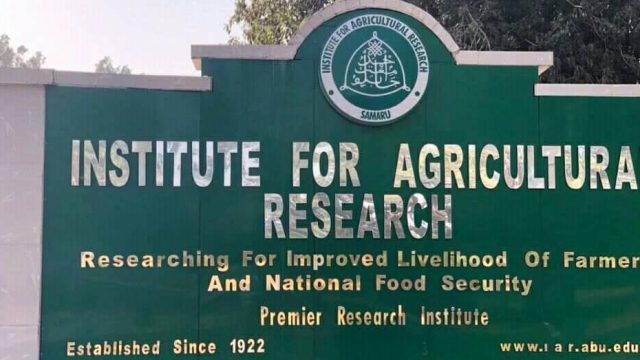
The Institute for Agricultural Research (IAR), Zaria, has disclosed that it is currently undertaking over 140 research activities, alongside the introduction of 19 new projects in 2025, aimed at addressing climate change and strengthening food security in Nigeria.
The Director of the institute, Prof. Ado Yusuf, made this known during the 2026 Annual Research Review and Planning Meeting and Zonal Refills Workshop held in Zaria.
Represented by the Deputy Director, Prof. Nafi’u Abdu, Yusuf said the research efforts were driven by the growing impact of climate change, including erratic rainfall patterns and early cessation of rains, which continue to affect agricultural productivity.
He explained that the institute’s research focuses on mandate crops, with emphasis on developing climate-resilient and drought-tolerant seed varieties to support farmers and enhance national food security.
Highlighting recent achievements, Yusuf said the institute released six new crop varieties in 2025, including four improved cowpea varieties (SAMPEA 22, SAMPEA 23, SAMPEA 24, and SAMPEA 25), one maize variety (SAMMAZ 78), and one groundnut variety (SAMNUT 30).
He added that the institute also developed additional crop varieties in collaboration with both international and indigenous seed companies, including sorghum, cotton, and maize variants.
The issues
Nigeria’s agricultural sector faces mounting challenges from climate change, including unpredictable weather patterns and declining soil productivity, which threaten food security.
Limited funding for agricultural research and weak collaboration between public institutions and private sector stakeholders have also constrained the development and adoption of innovative farming solutions.
This Video Is Trending Right Now 👇
Additionally, the gap between research outputs and practical implementation remains a concern, particularly for smallholder farmers who form the backbone of the sector.
What’s being said
Yusuf emphasised that IAR remains committed to developing farmer-focused technologies, particularly for smallholder farmers, noting that agriculture is central to national development.
He called for increased government investment in agricultural research and stronger partnerships with the private sector to ensure effective implementation of innovations.
In his remarks, the Vice-Chancellor of Ahmadu Bello University, Prof. Adamu Ahmed, urged researchers to prioritise practical solutions over theoretical outputs.
Represented by the Deputy Vice-Chancellor (Administration), Prof. Bello Sabo, he stressed the need for research that directly addresses hunger, malnutrition, and the everyday challenges faced by Nigerians.
What’s next
The institute is expected to deepen its research efforts by expanding collaborations with state governments, private sector partners, and international organisations.
Stakeholders also anticipate increased advocacy for funding and policies that support the adoption of climate-smart agricultural technologies.
Bottom line
As climate change continues to threaten agricultural productivity, IAR’s expanding research portfolio underscores the critical role of innovation in securing Nigeria’s food systems—though sustained funding and practical implementation remain key to achieving lasting impact.
For more Naija celebrity news and updates, keep following Gist News for the latest Naija celebrity news and trends in Newspaper Nigeria Headlines.
Naija gist news
latest Naija gist
Naija news live