This Video Is Trending Right Now →
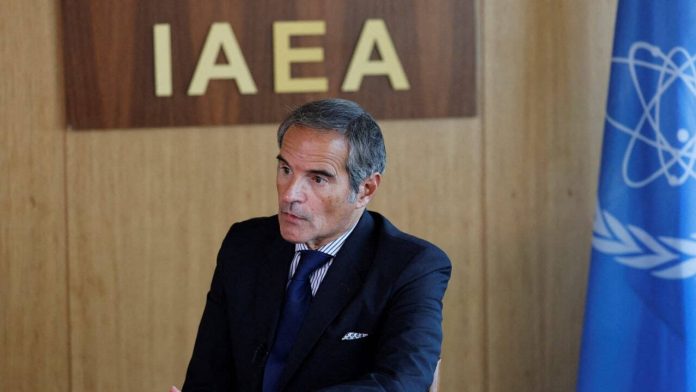
Key points
- IAEA chief Rafael Grossi says the 2015 nuclear deal (JCPOA) is no longer suitable as a foundation for new negotiations with Iran.
- The agency warns it cannot verify the status of enriched uranium following recent disruptions and restricted inspections.
- Global nuclear watchdogs renew calls for stronger non-proliferation and a sustained global ban on nuclear testing.
Main story
The Director-General of the International Atomic Energy Agency (IAEA), Rafael Grossi, has stated that the 2015 Iran nuclear agreement, formally known as the Joint Comprehensive Plan of Action (JCPOA), can no longer serve as a basis for any new nuclear deal with Tehran.
Grossi made the remarks on Wednesday during a press briefing at the United Nations Headquarters in New York, held on the sidelines of the latest review conference of the Nuclear Non-Proliferation Treaty (NPT).
He explained that developments in Iran’s nuclear programme over the years have significantly altered the landscape, making it necessary to consider a different framework for future negotiations involving Iran and global powers.
The IAEA chief also addressed concerns about enriched uranium reportedly affected by recent U.S.-Israeli airstrikes in Iran. He noted that inspectors had last verified nuclear materials in June 2025, during which approximately 440 kilogrammes of enriched uranium were sealed under agency supervision.
However, Grossi stressed that the agency is currently unable to confirm the status of the material due to restricted access, adding that verification would only be possible once inspectors are allowed to resume full monitoring activities.
The issues
The breakdown in full inspection access has raised concerns over transparency in Iran’s nuclear activities. There are also growing international tensions surrounding compliance with non-proliferation standards, especially amid geopolitical conflicts and reported strikes on nuclear-linked facilities.
What’s being said
Grossi said the JCPOA “could not constitute a basis” for a renewed agreement, insisting that “we need to look into something different” given the evolution of Iran’s nuclear capabilities.
He added that until inspectors regain access, the agency “cannot confirm” the current condition of enriched uranium stockpiles.
At the same forum, Robert Floyd, Executive Secretary of the Comprehensive Nuclear-Test-Ban Treaty Organisation (CTBTO), warned that rising global tensions are placing the nuclear non-proliferation system under strain.
He noted that “efforts to prohibit nuclear testing remain crucial,” adding that multilateral cooperation is increasingly under pressure from geopolitical rivalries and renewed rhetoric around nuclear testing.
Floyd emphasised that the CTBT, which bans all nuclear explosions, has significantly reduced nuclear testing globally, with fewer than a dozen tests recorded since its introduction. However, he acknowledged that the treaty has yet to enter into force due to pending ratification by nine key nuclear-capable states.
What’s next
The IAEA is expected to continue pushing for renewed inspection access in Iran while engaging global stakeholders on possible new frameworks for nuclear negotiations. Meanwhile, CTBTO officials are intensifying diplomatic efforts to secure full ratification of the test-ban treaty by remaining holdout states.
Bottom line
Global nuclear watchdogs are warning that existing frameworks are becoming outdated amid rising geopolitical tensions, urging renewed international cooperation to strengthen non-proliferation and prevent a resurgence of nuclear testing and escalation.
For more Naija celebrity news and updates, keep following Gist News for the latest Naija celebrity news and trends in Newspaper Nigeria Headlines.
Naija gist news
latest Naija gist
Naija news live