This Video Is Trending Right Now →
Key points
- Female academics and gender advocates have raised concerns over persistent discrimination, exclusion and unequal opportunities in African universities.
- Stakeholders called for stronger gender equality policies, increased female representation in leadership and improved access to justice within higher institutions.
- Experts warned that universities cannot achieve excellence while structural barriers continue to limit women’s participation and advancement.
Main story
Female academics and gender advocates from across Africa have called for urgent reforms to address systemic exclusion, unequal opportunities and structural barriers facing women in universities, warning that higher institutions are yet to provide equitable access to leadership, career advancement and justice.
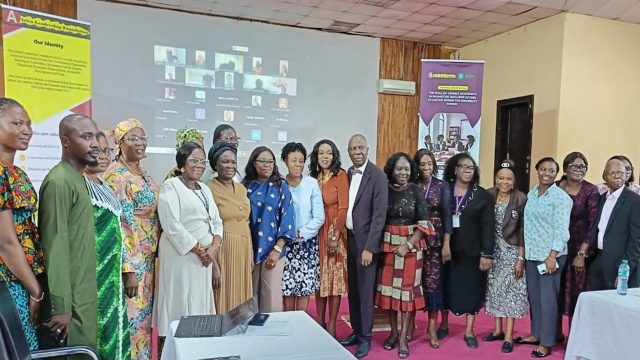
The concerns were raised during a post-International Women’s Day reflection workshop organised by the Africa Leadership Foundation in partnership with Oxfam in Africa. The event, held at the ALF Africa Hall in Ota, Ogun State, was themed: “The Role of Female Academics in Promoting Inclusive Access to Justice within the University System.”
Participants noted that despite increasing female enrolment and academic achievements across universities, women continue to face discrimination in promotions, leadership appointments, research opportunities and decision-making processes.
Executive Director of the Africa Leadership Foundation, Olumide Ajayi, said gender equality discussions often overlook women within academic institutions because universities are widely perceived as environments where fairness and justice naturally exist.
“We believe the university system should naturally be fair and should not discriminate, but what we later discovered is that this is not so,” Ajayi said.
He explained that the workshop was designed to provide a platform for female academics to share their experiences and contribute to practical frameworks aimed at improving access to justice and equal opportunities within universities.
Ajayi stressed that universities play a pivotal role in shaping future leaders and determining access to opportunities and influence, making it imperative to address inequalities within the institutions themselves. He added that recommendations from the workshop would be shared with the African Union, universities and regional institutions to support reforms and strengthen gender-responsive policies across Africa.
Interim Gender Justice Lead at Oxfam in Africa, Paul Vingi, said universities often mirror the broader inequalities existing in society despite their role in advancing knowledge and public policy.
According to him, many qualified women continue to struggle for recognition and leadership opportunities within academia.
“If women cannot experience fairness, protection and equal opportunity within universities, then we are reproducing inequality at the highest level of intellectual formation,” he said.
Vingi also cautioned against growing resistance to gender equality initiatives globally, arguing that women and girls remain disproportionately affected by inequalities in education, leadership and economic participation.
Delivering the keynote address, former African Union Commissioner for Education and Vice Chairperson of the Governing Board of the UNESCO Institute for Lifelong Learning, Sarah Ayang Agbor, described gender justice within universities as central to Africa’s development agenda.
“Universities are not only spaces of learning; they are microcosms of society, reflecting both its progress and its inequalities,” she said.
Agbor observed that women remain underrepresented in leadership positions, face unequal access to opportunities and are frequently excluded from key decision-making structures within universities.
This Video Is Trending Right Now 👇
She urged higher institutions to strengthen gender equality policies, establish independent reporting mechanisms, improve women’s representation in governance and create more inclusive institutional structures.
Also speaking, Professor of Gender, Labour and Workplace Relations at the University of Ibadan, Adebimpe Adenugba, said patriarchal institutional cultures continue to hinder the advancement of women in Nigerian universities.
She disclosed that only 17 female vice-chancellors currently head public universities in Nigeria and that just 38 women have occupied the position since independence in 1960.
“At the University of Ibadan, we have 17 faculties and only about five female deans. When it comes to decision-making, women are still not many in the system,” Adenugba said.
She further noted that the challenge of balancing academic responsibilities, administrative duties and family obligations often slows the career progression of female academics.
The issues
Despite progress in female enrolment and educational attainment, women across African universities continue to face barriers to promotion, leadership positions, research funding and participation in governance structures.
Stakeholders argue that institutional cultures, gender bias and weak enforcement of equality policies have sustained disparities that undermine both academic excellence and social justice.
The situation has raised concerns about the ability of universities to fulfil their role as centres of fairness, inclusion and intellectual development.
What’s being said
Participants called for stronger enforcement of gender equality and anti-harassment policies, increased representation of women in leadership and decision-making positions, and improved access to mentorship and professional development opportunities.
Speakers also advocated independent grievance mechanisms to address discrimination and workplace injustices within university systems.
They stressed that achieving gender justice requires collective action from university administrators, policymakers, male allies and civil society organisations.
What’s next
Stakeholders plan to engage universities, regional institutions and policymakers across Africa with recommendations from the workshop aimed at advancing gender-responsive reforms.
Advocates are also expected to push for stronger monitoring mechanisms to ensure institutions move beyond policy declarations and implement measurable actions that promote inclusion and equality.
Further dialogue and collaboration between academic institutions and development partners are anticipated to strengthen accountability and institutional change.
Bottom line
Female academics and gender advocates say African universities must do more than champion equality in principle. To fulfil their mandate as centres of learning and social transformation, higher institutions must dismantle structural barriers, expand opportunities for women and create systems that guarantee fairness, inclusion and equal access to leadership and justice.
For more Naija celebrity news and updates, keep following Gist News for the latest Naija celebrity news and trends in Newspaper Nigeria Headlines.
Naija gist news
latest Naija gist
Naija news live