This Video Is Trending Right Now →
Key points
- UN Chief calls for stronger disaster Resilience to Honour Earthquake Victims
- He says preparedness measures such as drills, building codes, and urban planning can significantly reduce casualties.
- The message marks the first International Day in Memory of Earthquake Victims, observed on 29 April.
Main story
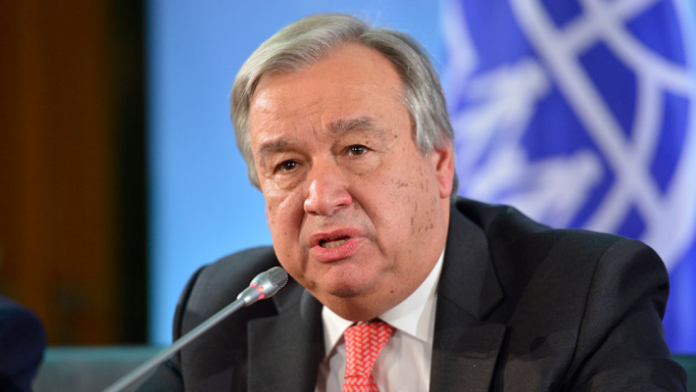
United Nations Secretary-General António Guterres has called on governments and stakeholders worldwide to prioritise investment in disaster resilience as a way of honouring victims of earthquakes.
Guterres made the appeal in a message released on Wednesday to mark the first International Day in Memory of the Victims of Earthquakes, observed annually on 29 April.
The commemorative day is intended to honour lives lost while reinforcing global commitment to prevention, preparedness, and recovery efforts in line with the Sendai Framework for Disaster Risk Reduction.
He noted that earthquakes remain among the most destructive natural hazards, capable of reducing entire communities to rubble within seconds and erasing decades of development progress.
Guterres stressed that while earthquakes cannot be prevented, their impact can be significantly reduced through proactive planning and investment in resilience systems.
The issues
The UN chief highlighted gaps in disaster preparedness, particularly in vulnerable regions where weak infrastructure, poor urban planning, and limited enforcement of building standards worsen the impact of seismic events. He emphasised that insufficient global investment in resilience continues to expose millions to avoidable risks.
This Video Is Trending Right Now 👇
What’s being said
“Earthquakes are one of nature’s deadliest hazards. In seconds, they can turn homes into ruins, undo decades of progress and claim thousands of lives,” Guterres said.
He added: “On this day, let us honour those lost by investing in disaster resilience.”
According to him, effective preparedness measures—including regular emergency drills, stronger building regulations, and improved urban planning—are essential to safeguarding lives.
“International solidarity is vital for response and recovery,” he said, stressing that collective action remains key to managing disaster risks.
What’s next
The United Nations is expected to continue promoting the Sendai Framework, encouraging member states to strengthen national disaster preparedness systems and increase investment in resilient infrastructure, particularly in high-risk regions.
Bottom line
While earthquakes cannot be stopped, the UN is urging a global shift towards preparedness and resilience, arguing that strategic investment today can prevent large-scale loss of life and infrastructure in the future.
For more Naija celebrity news and updates, keep following Gist News for the latest Naija celebrity news and trends in Newspaper Nigeria Headlines.
Naija gist news
latest Naija gist
Naija news live