This Video Is Trending Right Now →
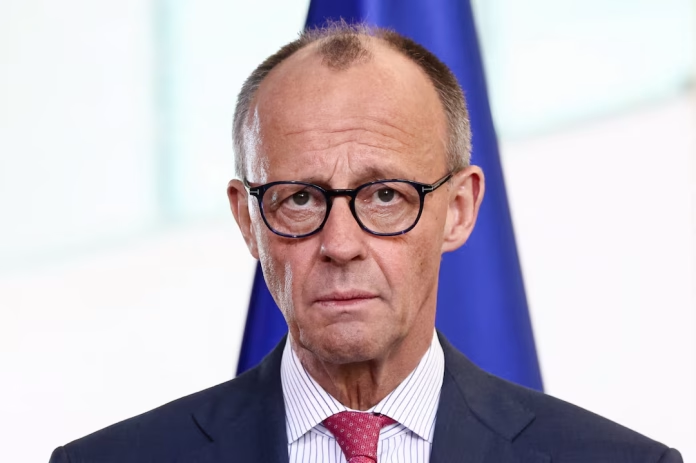
Key Points
- German Chancellor Friedrich Merz stated Germany’s commitment to ending Iran’s blockade of the Strait of Hormuz.
- Merz warned that a prolonged blockade of the strategic waterway would result in massive global economic damage.
- The Chancellor expressed readiness for German military engagement to ensure freedom of navigation under necessary conditions.
- Tensions have escalated between Merz and U.S. President Donald Trump over the military approach toward Iran.
- President Trump announced a review of possible U.S. troop reductions in Germany following recent diplomatic friction.
Main Story
German Chancellor Friedrich Merz has signaled a potential shift in Germany’s military posture, expressing a willingness to intervene to secure the Strait of Hormuz.
During a visit to the Bundeswehr in Munster, Merz emphasized that the ongoing blockade by Iran poses a severe threat to international trade and economic stability.
He framed the work of the German military as an indispensable contribution to the strength and unity of NATO during this period of heightened regional volatility.
The announcement comes amidst a public rift with the United States. Merz recently described the U.S. military engagement in Iran as “planless” and argued that the American leadership was being humiliated by Iranian authorities.
In response, President Donald Trump dismissed the Chancellor’s expertise on the matter and indicated that the U.S. is currently reviewing the number of troops stationed in Germany.
The Issues
A prolonged closure of the Strait would disrupt global energy supplies and lead to widespread economic repercussions for Germany and its partners.
The Chancellor’s remarks suggest Germany may move beyond its traditional diplomatic role toward direct military involvement in maritime security.
The verbal exchange between Merz and Trump has strained the trans-Atlantic partnership, leading to potential shifts in U.S. troop deployments.
This Video Is Trending Right Now 👇
While Merz criticizes the current U.S. strategy, Washington argues that Berlin remains indifferent to the broader threat of Iran’s nuclear ambitions.
What’s Being Said
“Germany is committed to bringing an end to Iran’s blockade of the Strait of Hormuz.” — Friedrich Merz, German Chancellor
“Merz doesn’t know what he’s talking about.” — Donald Trump, U.S. President
“The work carried out by the Bundeswehr in Munster is an important and indispensable contribution to a strong, united NATO.” — Friedrich Merz, German Chancellor
What’s Next
- Germany will continue to assess the military conditions required for engagement in the Strait of Hormuz.
- NATO leadership may be required to mediate the growing strategic divide between Berlin and Washington regarding Iran.
- The U.S. Department of Defense is expected to provide further details on the proposed reduction of troops in Germany.
- Economic analysts will monitor oil prices and shipping routes as the blockade of the strategic waterway continues.
Bottom Line
The threat of massive economic damage is pushing Germany toward a more assertive military stance, even as its relationship with its primary ally, the United States, faces significant diplomatic strain.
For more Naija celebrity news and updates, keep following Gist News for the latest Naija celebrity news and trends in Newspaper Nigeria Headlines.
Naija gist news
latest Naija gist
Naija news live