This Video Is Trending Right Now →
By Boluwatife Oshadiya, 27th April, 2026
Key Points
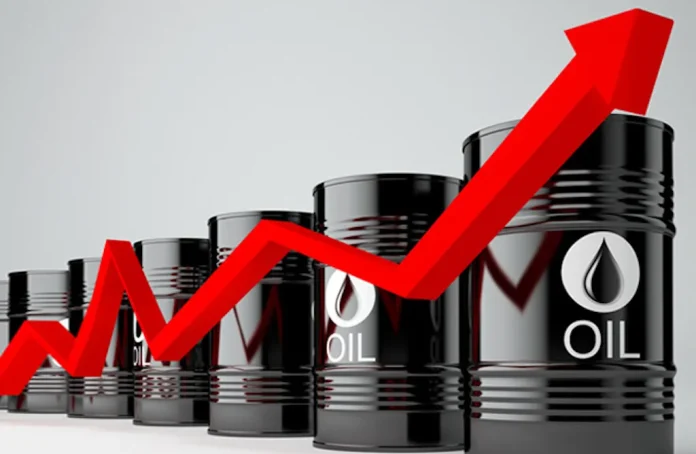
- Crude oil prices rose nearly 10% week-on-week amid escalating geopolitical tensions
- Disruptions in the Strait of Hormuz threaten roughly 20% of global oil supply
- Brent crude crossed $106 per barrel as supply concerns deepened
- Diplomatic signals provided only temporary relief to market pressures
Main Story
Global oil prices surged sharply over the past five days, driven by heightened geopolitical tensions between the United States and Iran, alongside significant disruptions to shipping activities in the Strait of Hormuz, a critical global energy chokepoint.
Brent crude, the international benchmark, climbed to $104.94 per barrel, marking a 9.9% increase from the previous week’s close of $95.48. Meanwhile, US benchmark West Texas Intermediate (WTI) rose 8.4% to $97.12 per barrel, compared to $89.61 recorded a week earlier.
The rally was initially triggered by Washington’s seizure of an Iranian-flagged vessel, prompting Tehran to respond by reclosing the Strait of Hormuz. The strategic waterway facilitates nearly one-fifth of global oil supply, making any disruption a significant shock to global energy markets.
Supply concerns intensified as reports emerged of a US naval blockade in the region, forcing dozens of oil tankers to turn back. The development signaled the potential for prolonged constraints on global crude supply, amplifying upward pressure on prices.
Additional geopolitical risks—including threats of retaliation, reported drone activity targeting US-linked vessels, and uncertainty surrounding a Pakistan-brokered ceasefire—further heightened market volatility.
Midweek, crude prices briefly eased following signals of a possible ceasefire extension and renewed diplomatic engagement. However, the relief proved temporary as Iran adopted a more confrontational stance, describing US actions in the strait as an act of war and casting doubt on its participation in upcoming negotiations.
This Video Is Trending Right Now 👇
Shipping activity in the Strait of Hormuz remained severely restricted, with minimal vessel movement reported over a 24-hour period, underscoring the scale of the disruption.
Toward the end of the week, oil prices resumed their upward trajectory as tensions escalated further. Reports of Iranian intervention involving foreign vessels and broader regional conflict dynamics—including US and Israeli military actions—pushed Brent prices above the $100 threshold.
By Friday, Brent crude had climbed past $106 per barrel, supported by escalating military developments and growing fears of sustained supply shortages.
What’s Being Said
U.S. President Donald Trump ordered naval forces to target vessels suspected of laying mines in the strait, while reports of additional underwater mine deployments intensified concerns over maritime security.
“The deployment of additional military assets and ongoing mine-clearing operations highlight the seriousness of the situation,” analysts noted, pointing to continued volatility in energy markets.
What’s Next
Market analysts expect oil prices to remain volatile in the near term, with geopolitical developments in the Middle East continuing to dictate supply dynamics.
While ongoing diplomatic efforts may help prevent a broader military escalation, persistent disruptions in the Strait of Hormuz are likely to sustain upward pressure on crude prices, with potential spillover effects on global inflation and energy costs.
For more Naija celebrity news and updates, keep following Gist News for the latest Naija celebrity news and trends in Newspaper Nigeria Headlines.
Naija gist news
latest Naija gist
Naija news live