This Video Is Trending Right Now →
Key points
- Federal Government rules out borrowing from IMF’s proposed $20bn–$50bn support fund.
- Finance Minister says Nigeria will avoid additional debt burden for now.
- IMF warns African economies face rising pressure from global shocks.
Main story
The Federal Government has stated that it has no plans to seek financial support from the International Monetary Fund, despite the institution’s proposed $20 billion to $50 billion fund aimed at supporting struggling economies, particularly in Africa.
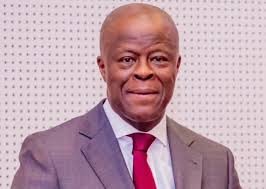
The Minister of Finance and Coordinating Minister for the Economy, Wale Edun, made the disclosure during a press briefing at the ongoing Spring Meetings of the World Bank and IMF in Washington, D.C.
Responding to questions on whether Nigeria would approach the IMF for support, Edun said, “Nigeria has no plan at the moment to approach the IMF for any other such burden.”
His comments come a day after IMF Managing Director, Kristalina Georgieva, announced plans for the financial support package and urged countries facing economic pressure to act swiftly in seeking assistance.
The issues
Nigeria’s position reflects ongoing concerns about rising debt levels and fiscal sustainability, as the government seeks to balance economic reforms with prudent borrowing.
At the same time, African economies are facing mounting external pressures, including geopolitical tensions, rising energy costs, and slowing global growth.
The Middle East crisis, in particular, has intensified concerns over oil price volatility and its impact on inflation, fiscal stability, and economic growth across energy-importing nations.
What’s being said
Wale Edun acknowledged that African countries require additional support, noting that global shocks disproportionately affect the region.
“This is in terms of the threat to macroeconomic stability… and their ability to create jobs and reduce poverty,” he said, adding that vulnerable economies “need and deserve extra help.”
This Video Is Trending Right Now 👇
On her part, Kristalina Georgieva emphasised the importance of timely financial intervention, warning that delays in seeking assistance could worsen economic conditions.
“My advice is that when you need help financially, don’t hesitate to move fast,” she said.
Georgieva also highlighted the broader global impact of ongoing geopolitical tensions, projecting that global economic growth could decline from 3.4 per cent to 2.1 per cent in 2026, with a potential downside risk to 2 per cent in a worst-case scenario.
What’s next
Nigeria is expected to continue focusing on domestic economic reforms and alternative financing strategies rather than external borrowing from the IMF.
Meanwhile, the IMF will likely identify and support vulnerable countries in Sub-Saharan Africa as part of its planned financial intervention.
Global economic developments, particularly oil price movements and geopolitical stability, will remain key factors influencing policy decisions.
Bottom line
Nigeria’s decision to avoid IMF borrowing signals a cautious approach to debt management, even as global economic uncertainties mount. The challenge will be sustaining economic stability without external financial support amid rising pressures.
For more Naija celebrity news and updates, keep following Gist News for the latest Naija celebrity news and trends in Newspaper Nigeria Headlines.
Naija gist news
latest Naija gist
Naija news live